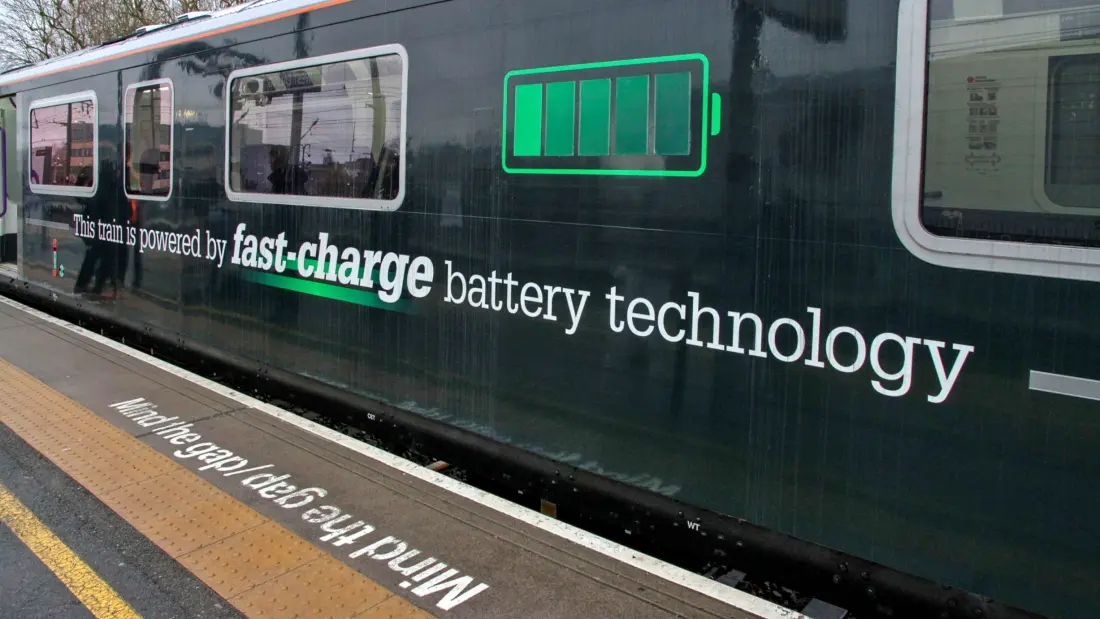
Today (Saturday 31st January 2026) Great Western Railway’s battery train (Class 230) began public service. Initially it will operate Saturdays only with a view to increased coverage during the week as the year progresses.
I attended the first day’s operation in the early morning with the 08.15, 08.45 and 09.15 trips from West Ealing to Greenford. It was considerably quiet the first two runs however by the third numerous enthusiasts had arrived and the train got quite busy. Evidently it will be very busy as the day progresses! Nevertheless, as videos later showed, the very first service of the day was quite busy with Youtubers and Vloggers.
Although this post was uploaded at 11.30am, its not by any means complete. Nevertheless the aim is to try and be a little different. I’ll add more pics and information as the day goes on.
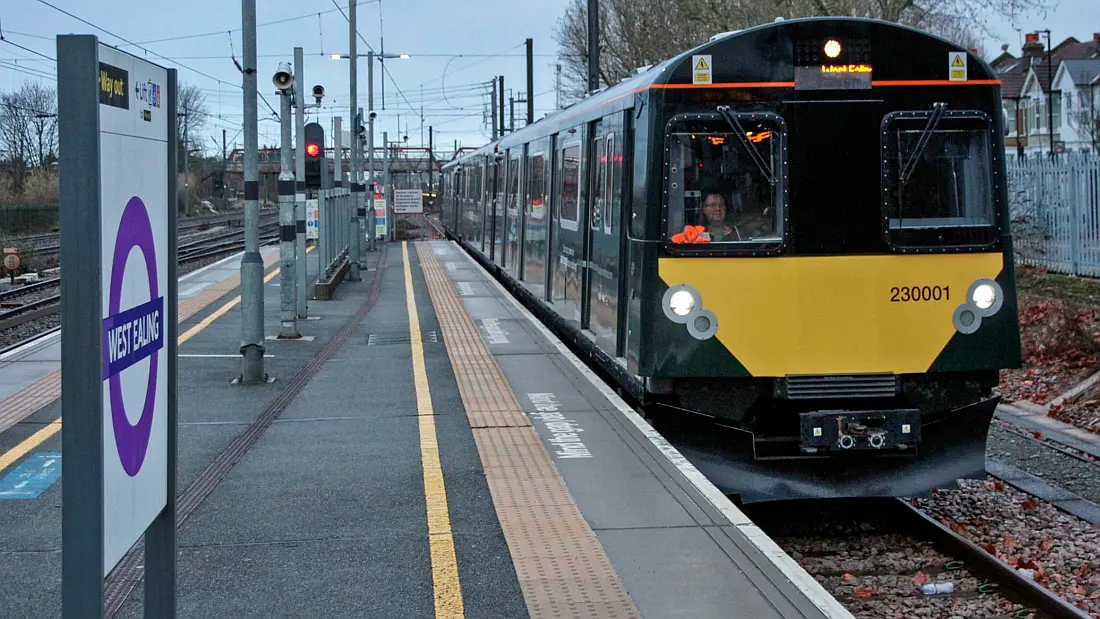
GWR’s battery train – the Class 230 – arrives at West Ealing approximately 08.11am on its first day of public service. London Rail/Author’s photo.
The first train of the day was recorded by Neil Sackley.
The 1st 100% battery operated train @GWRHelp 230001 ends its inaugural passenger journey at Greenford this morning. pic.twitter.com/pTalbTtZsf
— 🎧 Neil Sackley 📻 (@djneilsackley) January 31, 2026
First train of the day at Greenford.
The usual Paddington to West Ealing run departing at 05.43am (departing West Ealing at 05.55) was dropped in favour of a start from West Ealing at 05.30am. The train came from West Ealing sidings at 05.20am – evidently it berthed there overnight. The first service was at 05.30am hence it was an additional service. This differing arrangement is likely because the train does not have a derogation to cover the run from Paddington.
Real Times Trains show the service as arriving in Platform Four to begin service. I wondered about that as it didn’t go straight into Platform five (the bay). Its probably because the layout does not permit a shunt. Videos from this morning (eg JenontheMove) show the unit arriving in Platform four, so I’m not sure about the derogation bit for it must also include at least that one main line platform at West Ealing. Normally the first service of the day arrives from Paddington (having first arrived from Reading) and uses Platform three before crossing over to the branch, however in the case of the Class 230 it was the opposite way round with it arriving from the sidings and then, as a pubic service, heading in the other direction towards Greenford.
The Greenford branch (as a passenger operation I must stress) is evidently the only GWR example in the home counties to have both a manual signalbox and manual signals (even if these are just mere ground discs) thus its now a rarity. The next example of such a classic operation is Maidenhead to Marlow. There are no semaphores on this line however train control is still undertaken by a classic token system with interlocking instruments. The Greenford semaphores are by no means the only examples that can be seen from the tube. The Bakerloo also has a few examples that can be seen as its tube trains pass the Wembley reception sidings. Anyway, the signals on the New North main line (or what remains of it) are GWR lower quadrant semaphores whilst those on the actual branch are ground discs. One of the better examples of the semaphores can be seen from Greenford station itself.
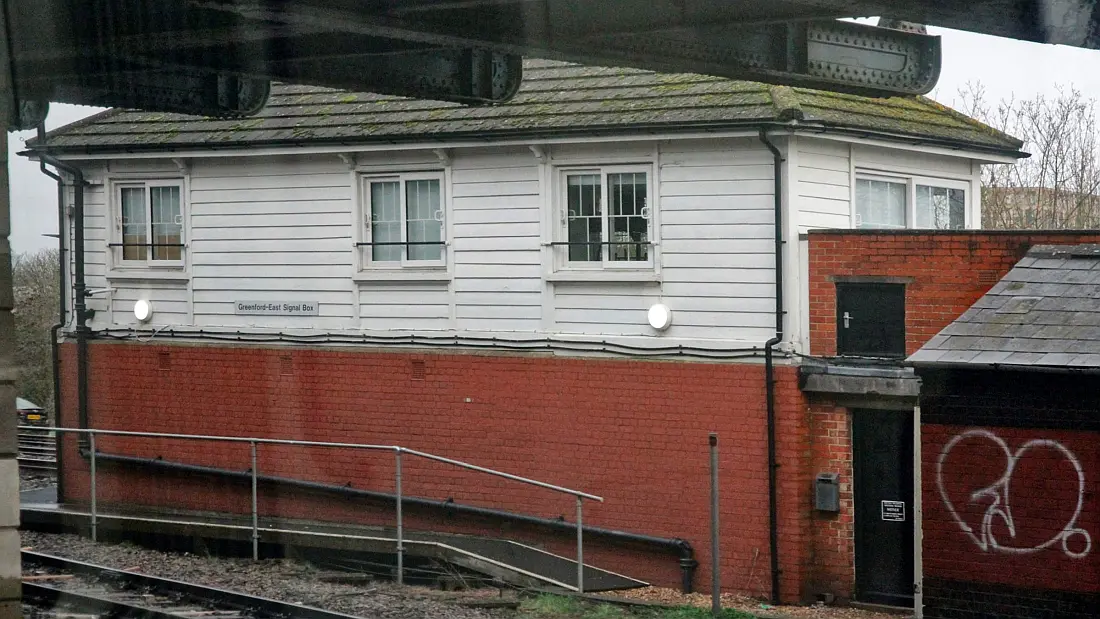
Greenford East signal box can be seen very briefly as the shuttle service enters the Greenford bay spur. London Rail/Author’s photo.
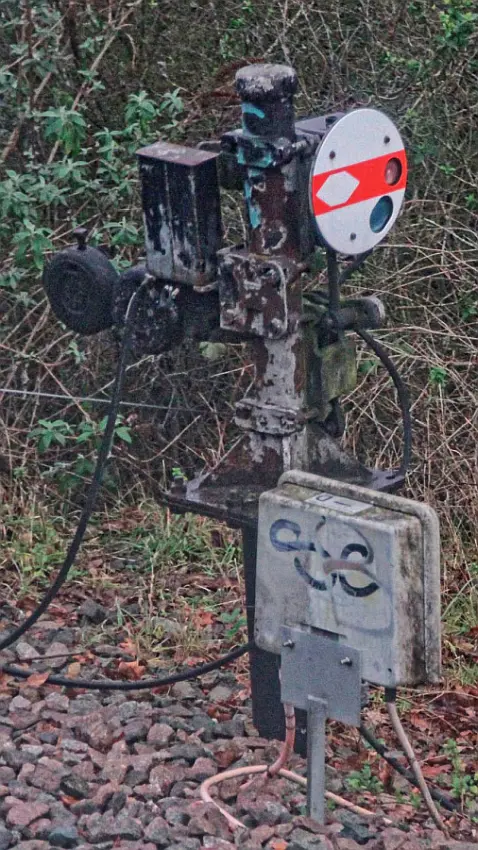
Rare shunt signal on a tall post at Greenford South junction. London Rail/Author’s photo.
The actual signals on the Greenford branch and its spurs are now all colour light with the last semaphores having been replaced a year or so ago by the most modern signals. However there’s three ground disc/shunt signals on the Greenford branch and spurs still operated by the traditional wire and lever method. None of these signals are actually required for the operation of the Greenford train itself but are for freight trains where locomotives may need to shunt or change ends.

The project has had a dedicated team whose efforts have brought about this excellent fast charging system which no doubt has the potential to change the way trains are powered on the more remote lines. London Rail/Author’s photo.
These GWR staff have done a lot to ensure the project stayed the course ever since Vivarail and its D-train programme floundered. The above picture has GWR’s fast-charge Technology Development Manager Julian Fletcher at left, who has featured in a number of interviews regarding the Class 230. Indeed this morning both were busy with interviews however I managed to get this shot of both together when they had a quiet moment to spare. The other person is John Carter, GWR’s Media and Communications Manager.
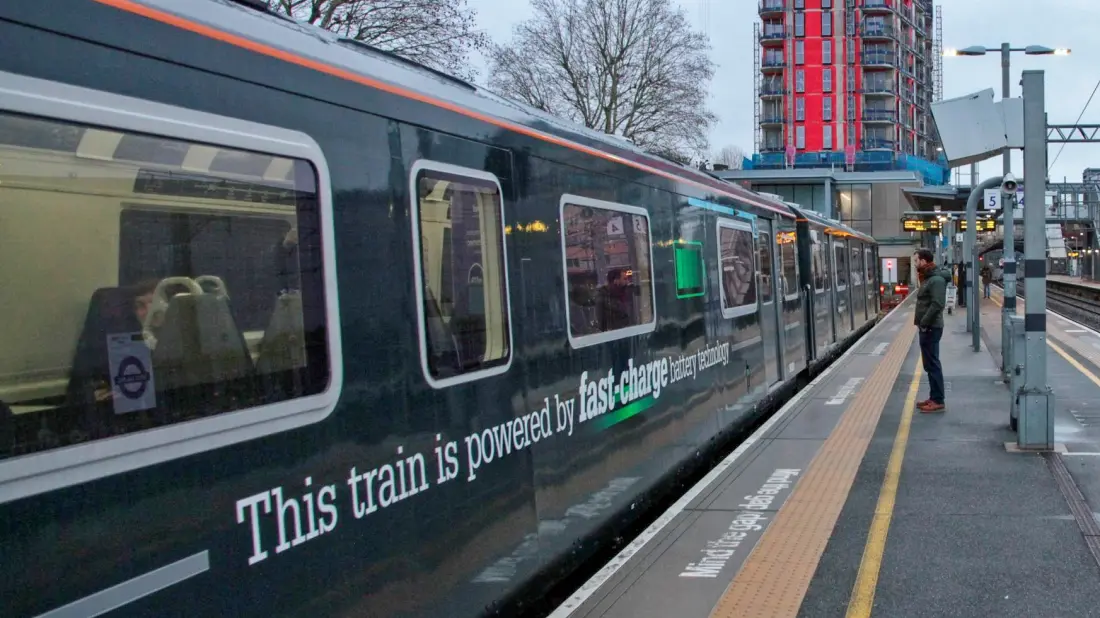
The early part of this morning saw very few rail enthusiasts present. The quite empty platform at West Ealing is a testimony to that. The one person present is Rail Freight Manager Simon Kendler – who is seen admiring the Class 230 as it arrives from Greenford. London Rail/Author’s photo.
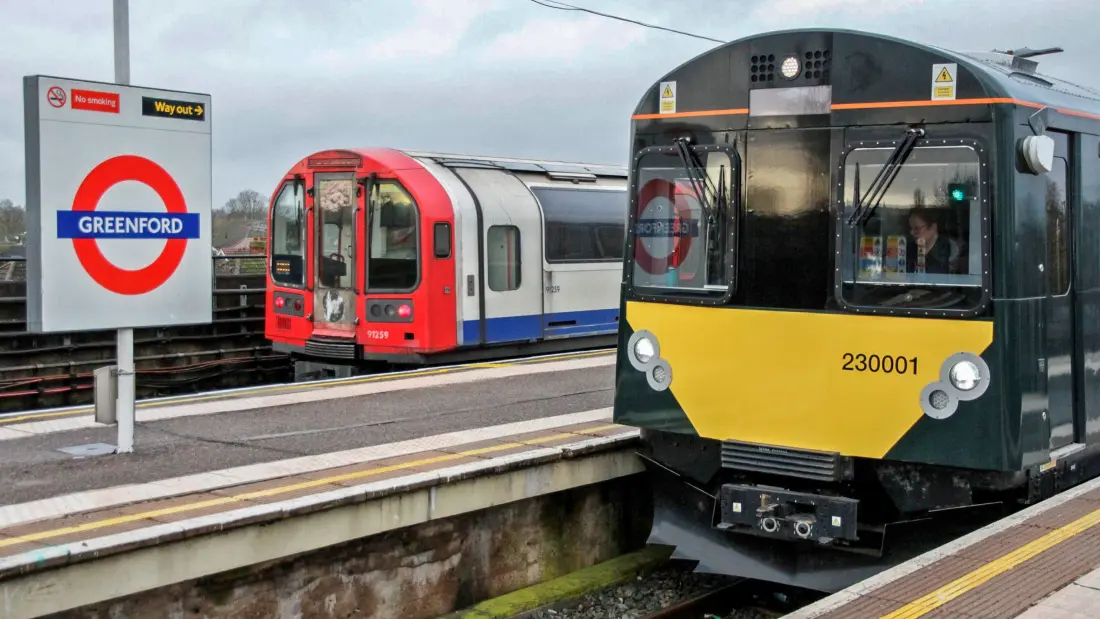
‘Fancy meeting you here!’ The 1992 tube stock no doubt remembers the Class 230 when it had formerly been D78 Stock and sighted at both Mile End and Ealing Broadway. London Rail/Author’s photo.
In an alternative universe the GWR train could have as easily have asked the 1992 tube stock ‘what on earth are you doing here?’‘ That because the line the 1992 stock is on was once part of the Great Western’s portfolio! The Central Line’s branch from North Acton to West Ruislip (and even Ruislip depot itself) was built entirely by the Great Western Railway.
If anyone had thought the Hammersmith and City line had been the only one to be both built and electrified by the Great Western, they could not be more wrong! The Ealing extension was also undertaken by the GWR (in conjunction with the Central London Railway) and following that was the line from North Acton to West Ruislip. Evidently the Great Western gave a lot to be grateful for…
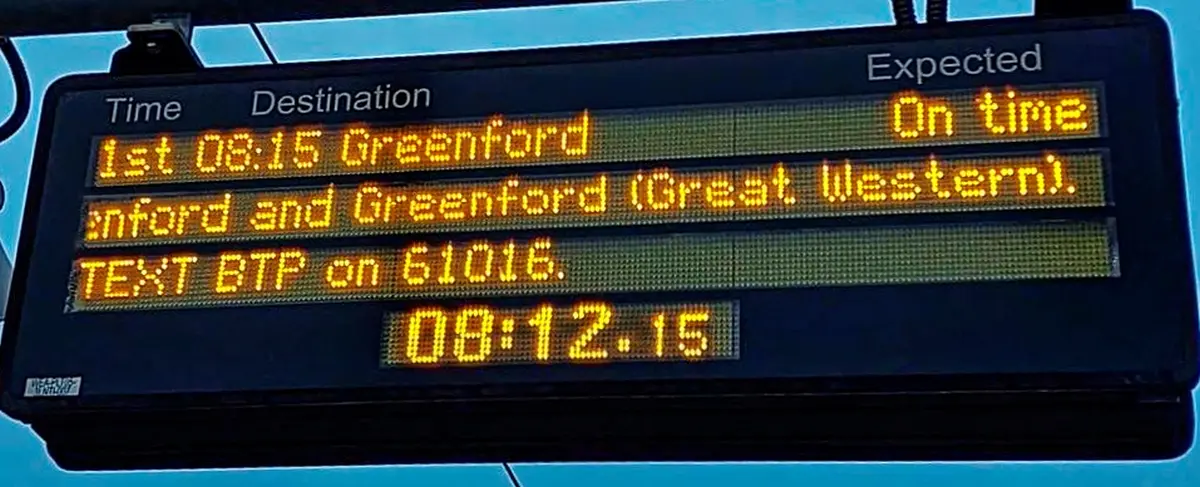
A nice, subtle reminder that Greenford has always been Great Western! London Rail/Author’s photo.
In terms of full sized LT trains reaching Greenford, some might think the example of a GWR Class 230 (formerly D78 stock) happens to be the only instance this has happened. No so fast! The line from North Acton to West Ruislip is in fact built to standard main line loading gauge – because without that the Great Western could not have even operated the line’s steam services before it became part of the LT empire. Its known the Metropolitan’s A Stock was tested on the North Action to West Ruislip line prior to introduction on the Met in 1961.
Fast-charged and it's go, go, go!
— GWR (@GWRHelp) January 31, 2026
Our record-breaking battery train is now in passenger service.
Operating between West Ealing and Greenford, it shows the potential benefits of fast-charge technology to regional rail in the UK. #SustainableTransport #BatteryTrains… pic.twitter.com/njnVbzSmSW
Post published by GWR early this pm heralding commencement of its Class 230 service.
GWR has a press release dated 29th January 2026 which sets out its intent to run a regular Saturday service on the Greenford branch. No doubt it was this that set the railway world buzzing with excitement!
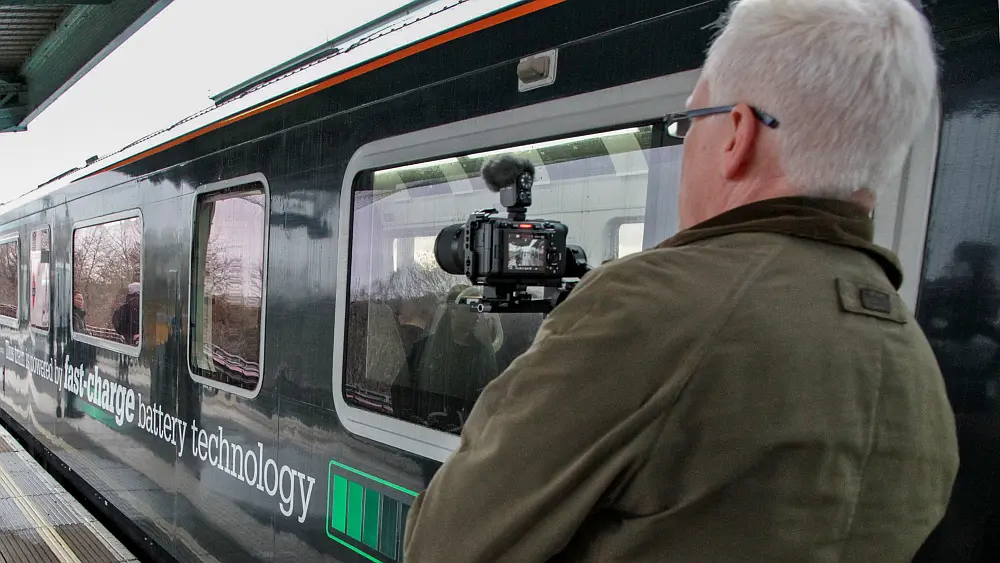
Richard Bowker of Green Signals filming at Greenford. That segment can be seen very briefly here on Youtube. London Rail/Author’s photo.
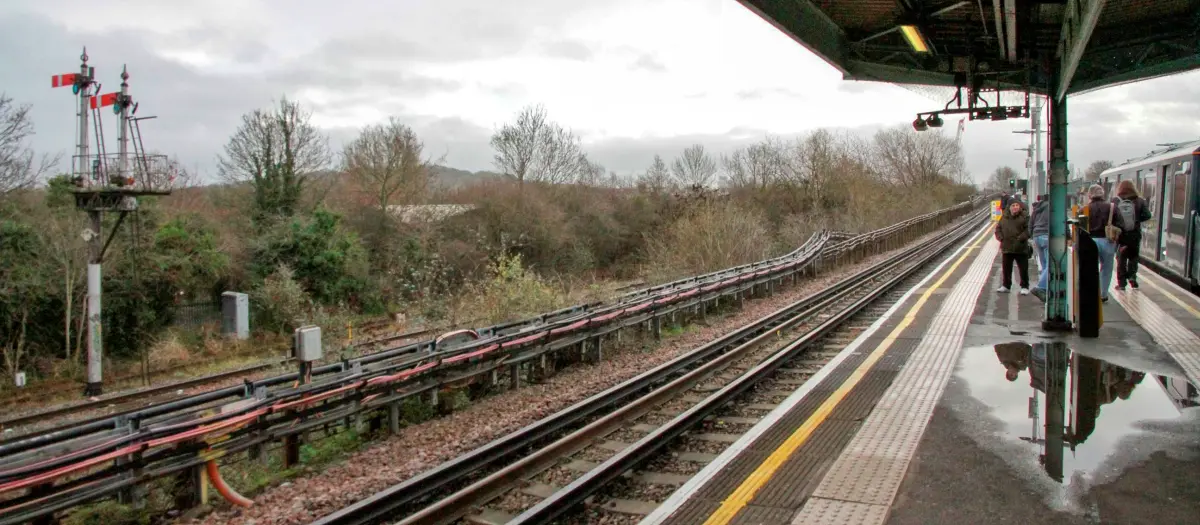
While we are at Greenford why not enjoy the station’s signals? Besides the usual colour lights for both LT and NR tracks, a pair of lower quadrant junction signals on the New North main line can still be seen from the platforms. These are perhaps best viewed from the Class 230 in the platform! Another can be seen near Greenford East signal box. More can be seen as one travels east on the Central line. London Rail/Author’s photo.
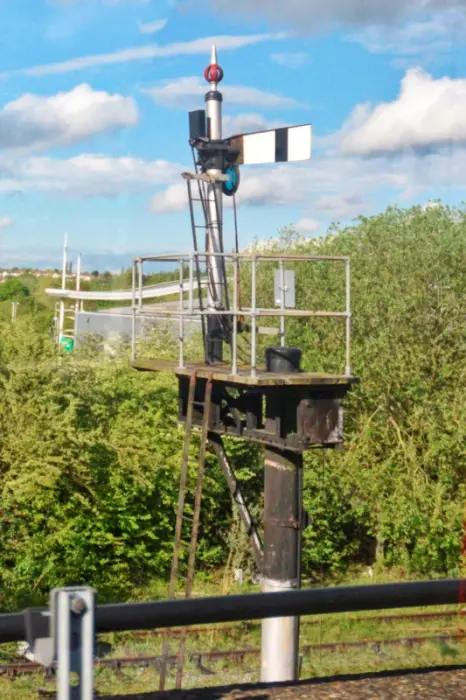
Picture taken on a different day – this is the signal by Greenford East signal box – its best seen from a Central line train. London Rail/Author’s photo.
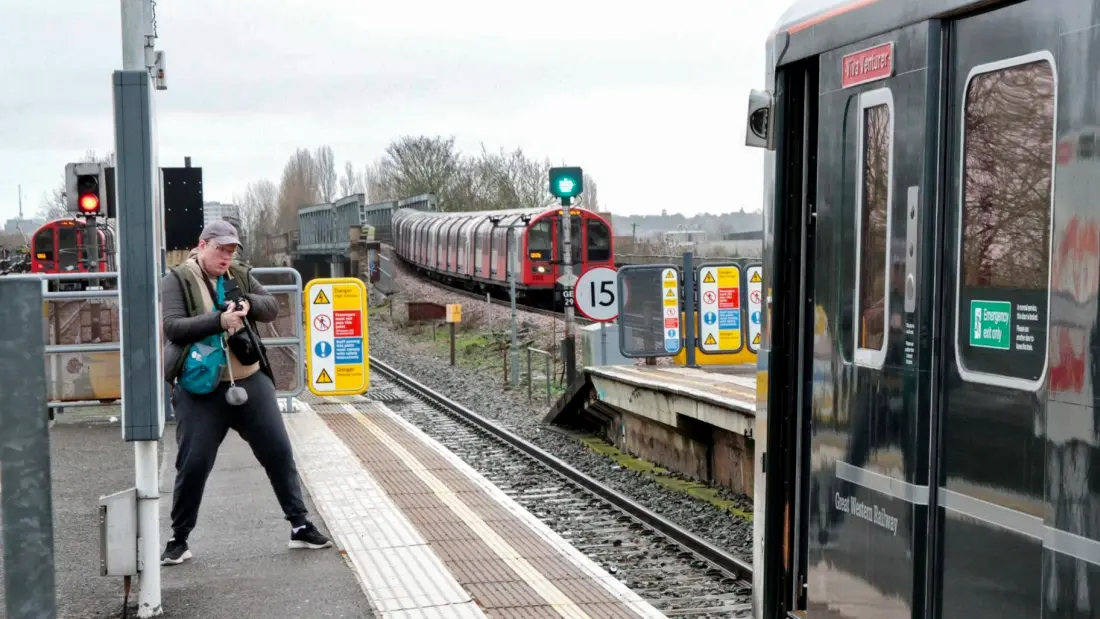
Enthusiast takes pics of the battery train on its first day of service as 1992 tube stock is seen both arriving and departing the station. London Rail/Author’s photo.
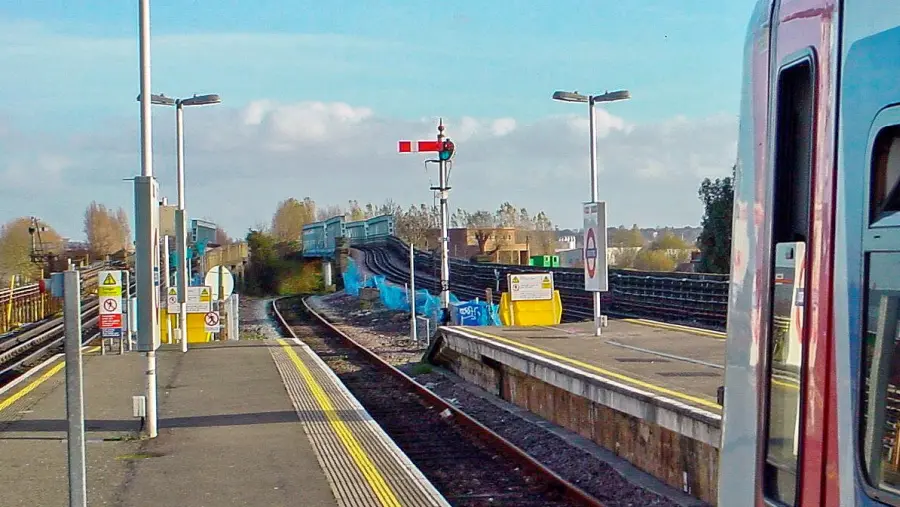
The bay platform for the Greenford shuttle once had a semaphore starter signal. The Thames Turbo trains still run on the branch only they’re now in GWR green livery. The Turbo pictured (165005) was still in Network South East colours eight years after NSE had finished! 160005 is now with Chiltern Railways. London Rail/Author’s photo.
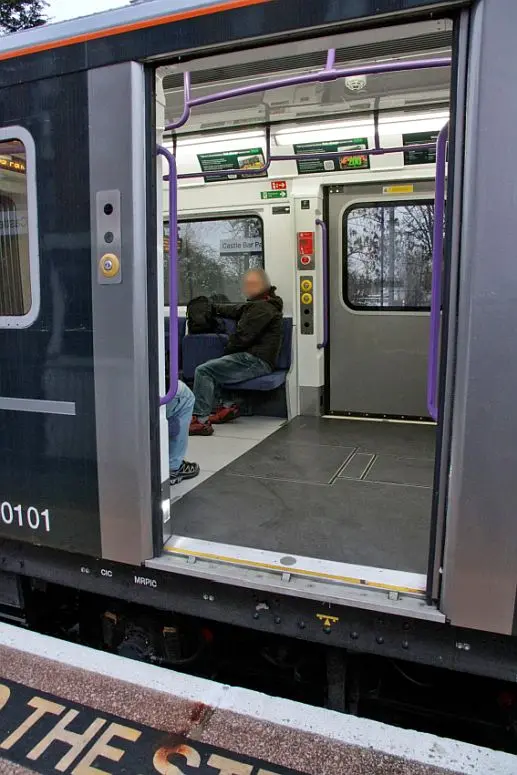
Some were commenting on the line’s accessibility issues. Clearly there’s a huge step up for anybody who uses Castle Bar Park station! London Rail/Author’s photo.
Short video showing the struggle to get onto the train at Castle Bar Park station. Note how far down the person is seen when they are first sighted!
The Class 230 has an excellent interior which is most suitable for wheelchair users and also their companions. A lot of thought has been put into this and its commendable. The downside however is the Class 230 is somewhat on the high side when it comes to boarding and alighting. At Castle Bar Park however its almost like a chasm. Its easily worse than, for example, Clapham Junction.
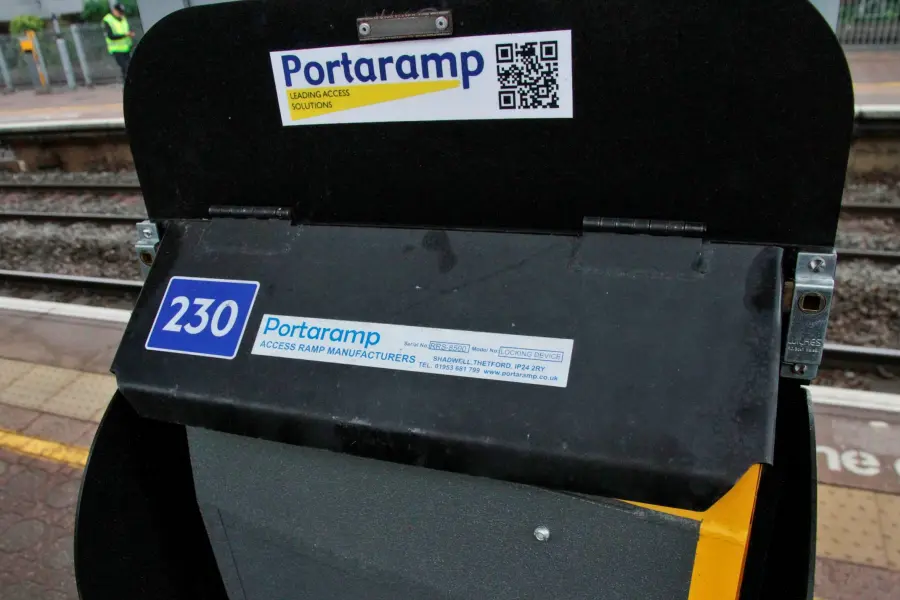
The Class 230 does indeed have special ramps provided. These are available at West Ealing and Greenford.
Drayton Green and Castle Bar Park are not accessible stations, the former because the platforms are sited on a curve and the latter because the step up from platform to train is simply far too high. NR information says South Greenford is accessible despite steep approach ramps – the step from platform to train there is the same as at West Ealing and Greenford. However I did not see any ramps at South Greenford therefore its evident the ramp that is carried on the Class 230 has to be used.
Leave a Reply