Category: London Transport
-

A minor update of the article posted two years ago featuring the Central Line around Wood Lane/White City showing how the area’s changed. Previous overground sections of the Central Line are now underground. The header image shows the Central Line tracks as they approach Ariel Way. This section was the original route of the Central…
-
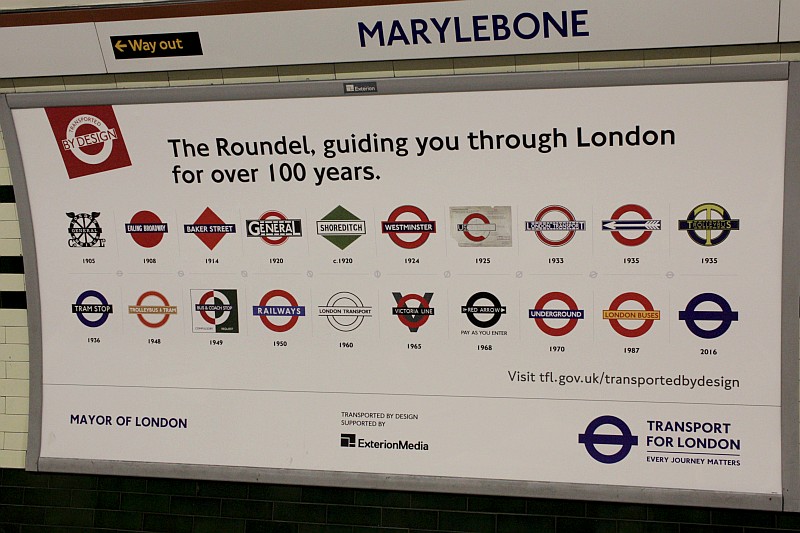
TfL has just published a new poster commemorating the evolution of the LT roundel. Seems Marylebone’s southbound platform has the only large sized poster so far on the network. There are smaller versions at other tube stations for the escalators as shown here.
-

Pavement Lights The subway’s pavement lights can be seen here in Thurloe Street near the station entrance. It seems there were originally six sets of pavement lights in the subway – including two small lights in the turn from the main tunnel to the steps leading into the station. They can be seen from outside…
-
The Subway’s Route The subway at the South Kensington station end where it joins the station’s ticket hall. This isn’t the original entrance but rather it was from a footbridge below which directly linked to the platforms. There seems no records of when these alterations were effected but it appears it was in the late…
-
The South Kensington subway is the most heavily used foot tunnel in the UK, carrying many millions of people, and it links the tube station at South Kensington with London’s famous museums along Exhibition Road. These are the Natural History Museum, the Victoria and Albert Museum and the Science Museum. The subway is owned by…
-
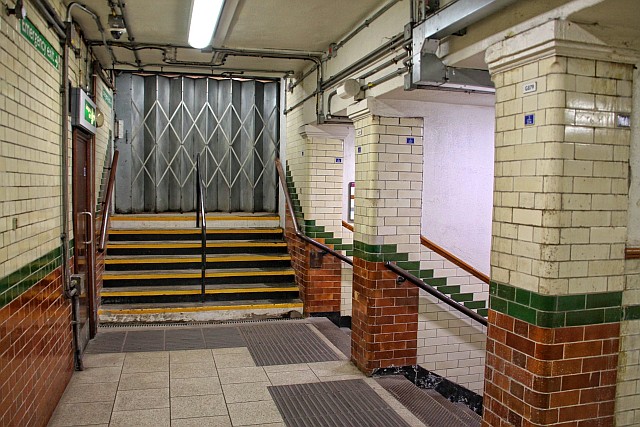
1863 is the year the Metropolitan Railway opened. It consisted of four miles and six through stations. Of these just three were truly underground. Gower Street (Euston Square), Portland Road (Great Portland Street) and the more famous Baker Street.The main entrance was originally at the western end of the station, and this was latterly added…
-

Common knowledge: Q – When was the first full trial run on London’s Metropolitan Railway? A – 24 May 1862 Many sources use this date as being the date of the first full, official, run along the entire Metropolitan Railway. Sadly the answer is completely wrong! During recent research on the Metropolitan Railway, I set…
Search
Latest Posts
- Guinness minimalism at Covent Garden
- Its a bold life for London’s tube!
- Waterways’ extra funding
- GWR Battery train in public service
- Canal breach news
Categories
- .
- Advertising
- America
- Architecture
- British Railways
- Closed Railway
- Historical
- International
- Ireland
- London
- London Transport
- Narrow Gauge
- Other Transport
- Quirky
- Shinkansen
- Standard Gauge
- Tube
- Waterways
Tags
accessibility america anniversary breach canada canal canals closed railway commuter rail deep level tube elizabeth line europe great eastern main lline great western branch great western main line great western railway high speed rail industrial archaeology infrastructure japan london history london underground metro operational issues oralism paddington publicity quirky rail history railway railway history railway problems railway station roads station street tokaido line tramway transport tube tube station tunnels underground railway walking water transport