A recent video from Our History Underfoot (26th May 2026) covering the former Hayfield branch in Derbyshire was featured, along with the peculiar train operation at New Mills Central. This brought to mind a piece written a few years ago that included a picture of a DMU at rest within the tunnel leading to the Hayfield branch, presented here.
The Hayfield tunnel, a 197-yard-long DMU tunnel at New Mills, was a true rarity since it served as a stopover for DMUs travelling from Manchester to New Mills Central. On the British railway network, there was only one instance outside of cities. A few railways that have been preserved currently store their rolling stock in tunnels, but that is a different matter entirely! This enigmatic tunnel was a short stub of a branch line that was used as a stabling point, although it has long since closed. I photographed a Metro Cammell unit in the tunnel indicated above in 1992 and nearly missed the shot! My camera was ready for anything that might be spotted along the Hope Valley route such as some of the UK’s more substantial tunnels at Cowburn and Totley – but not a short tunnel off to one side!
It surprised me that British Railways was still using the Hayfield tunnel for train stabling; unfortunately, this practice ended a year or two after my photo was shot. The photo it’s a little fuzzy and yet apparently the only close up example of a DMU parked in this tunnel. Other photographs depict DMUs approaching it after dropping off their passengers at New MIlls Central or emerging from it.
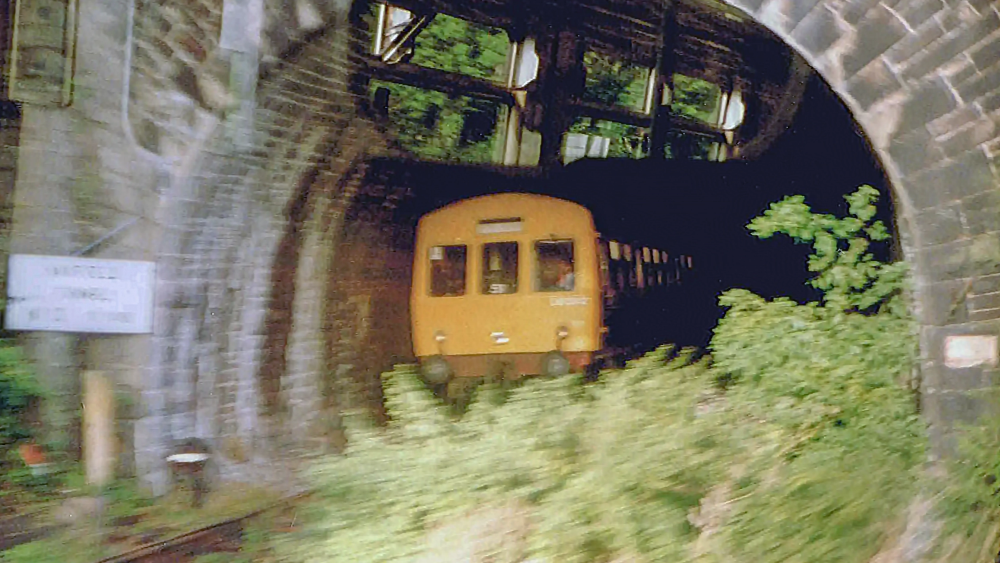
The Met Camm DMU spotted at rest in the Hayfield tunnel just outside New Mills Central. I took this picture in the summer of 1992.
The tunnel was a part of the line to Hayfield, and is adjacent to New Mills Central station. The branch was shut in January 1970, justifiably to save money on tunnel maintenance! The irony! Afterwards trains continued into the tunnel to New Mills Tunnel End, where they remained for the duration of what would have been a trip to Hayfield! The line to New Mills Tunnel End soon shut because it was pretty futile and DMUs instead stabled in the tunnel. BR then closed off the tunnel’s eastern portal and sold the trackbed towards Hayfield.
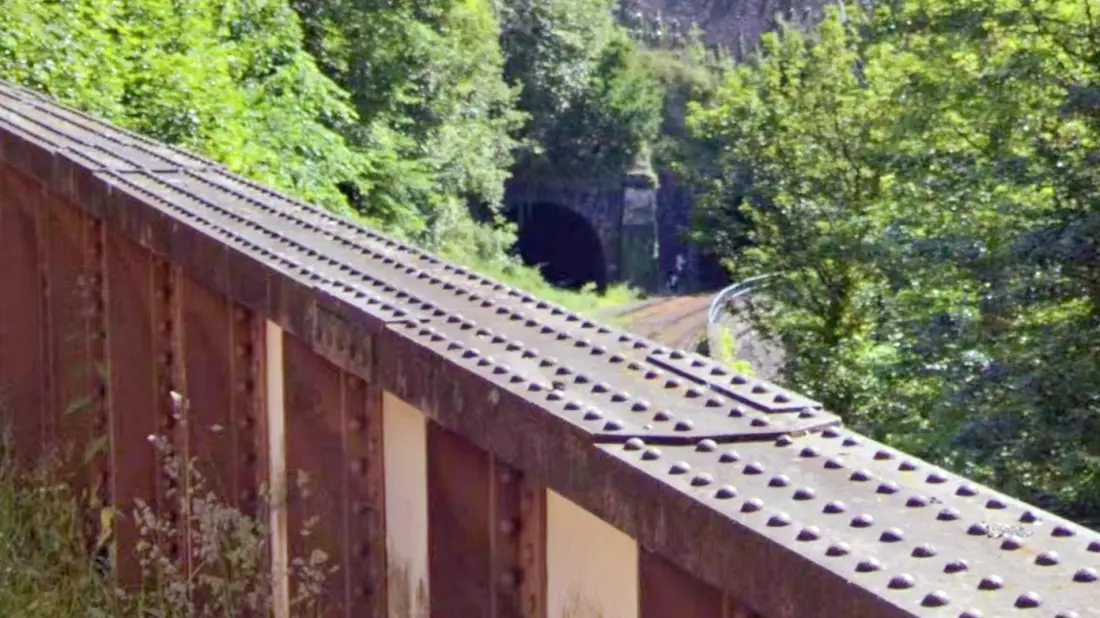
Google Street’s view of the long disused Hayfield tunnel as seen from the station’s bridge. The Hope Valley line curves to the right. Google Streets.
The Hayfield tunnel is located next to the New Mills tunnel on the Hope Valley route, in case anyone is unsure of its location. The Hayfield route used to bend to the left, but that route now curves to the right. As a result, there were two tunnel entrances next to each other that led in different directions. Steven Ansty’s picture (below) of the Class 66 at New Mills Central shows the disused Hayfield tunnel in the background.
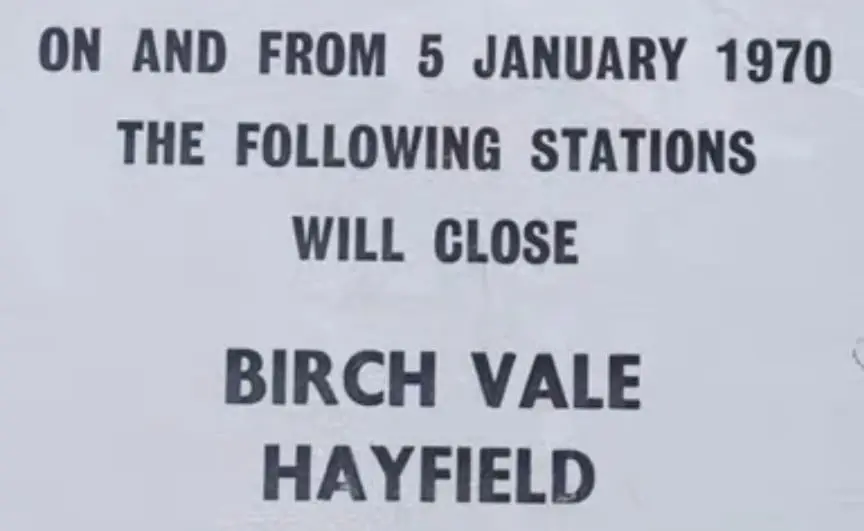
The Hayfield branch’s closure January 1970. Facebook.

Class 108 DMU emerges from the Hayfield branch tunnel to take up a working from New Mills Central to Manchester in 1986. Source: Flickr.
By way of trains continuing to stable inside the Hayfield tunnel, it was a perverse sort of rationalisation. A ground signal located at the tunnel’s entrance controlled trains exiting it. It’s interesting to note the branch was originally thought suitable for integration into Manchester’s extensive new electrified railway network! Sir Henry Johnson, a former chair of British Railways and Chief Operating Superintendent of the Eastern Region, had praised the benefits of the Great Central Railway (GCR) Woodhead route’s electrification and suggested to the British Transport Commission this electrification be greatly expanded. This included work as far as Liverpool as well as the line as far as New Mills plus the Hayfield branch. These were chosen because of their GCR origins. As it stands the Hayfield branch never saw modernisation. BR claimed that the branch had to shut because of the tunnel’s degradation, and that even though the line had a fairly robust patronage.

A great shot of a Class 66 on a freight approaching New Mills Central (the signal box can just be seen at right.) Straight ahead is the former tunnel that marked the start of the Hayfield branch. The other, the New Mills tunnel (at right) is somewhat obscured by the train itself. Source: Twitter.
Despite passing beneath New Mills, the tunnel has always been known as Hayfield Tunnel. Some however refer to it as New Mills tunnel. If one zooms into this old photograph circa 1910 which shows the two tunnels side by side on the ETH Zurich website it can be clearly seen our tunnel in question is called Hayfield tunnel. The New Mills Tunnel End signal box is no doubt the main source of confusion.
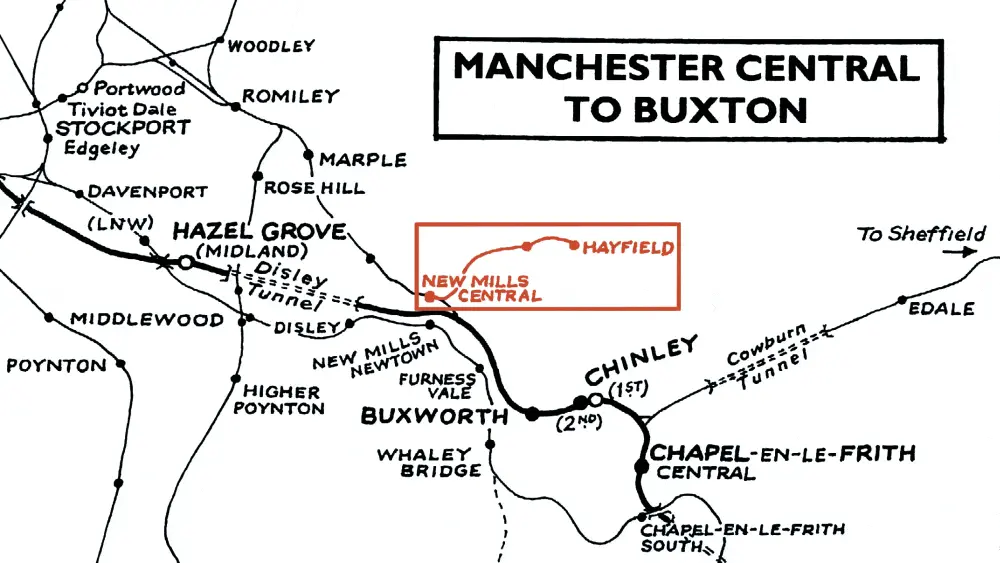
Map I adapted from Alan Young’s work (available at Wikipedia for use and modification) for the original post in order to highlight the Hayfield branch’s location. Someone no doubt managed to grab the above image I had created some years back – and reused it on this Facebook page re the Hayfield branch!
A closer look at Hayfield tunnel

The tunnel as seen in 2016 with a bit of track still in it. Source: Wikipedia
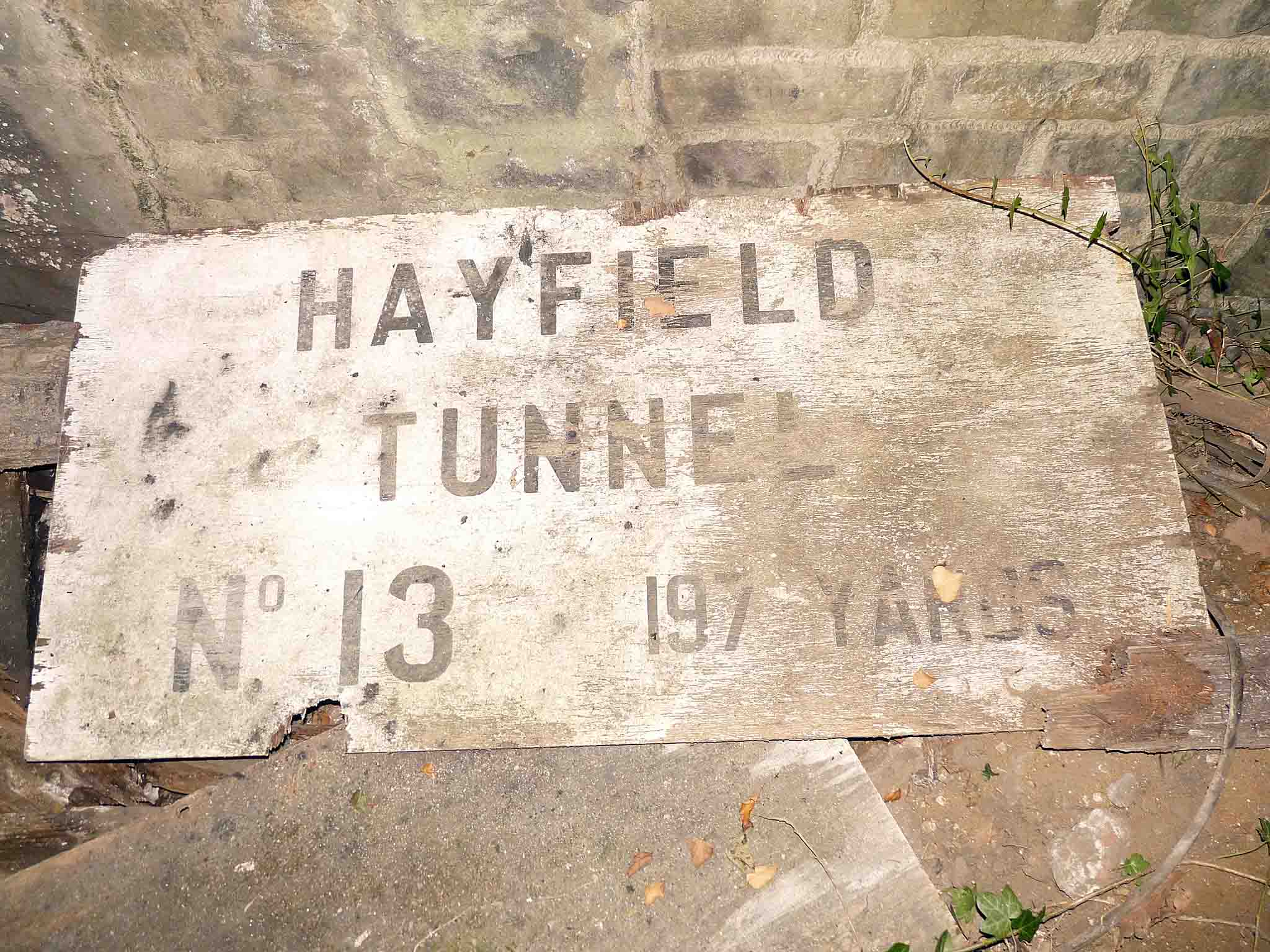
Board giving the name of the structure as Hayfield tunnel as well giving as its length. Its the same board as seen in my photograph. Source: Tunnels UK
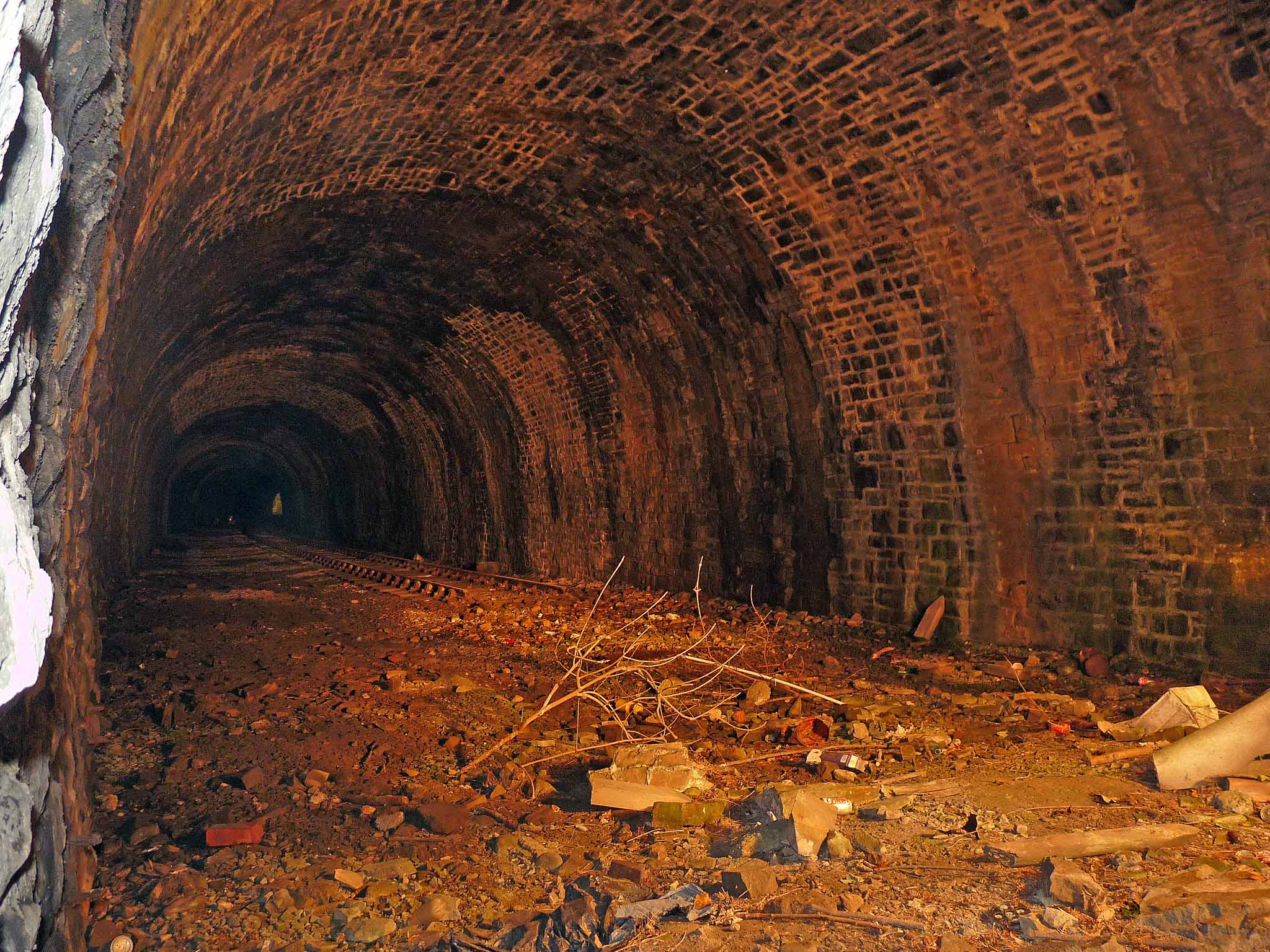
Track remaining in the Hayfield tunnel, 2009. Source: Tunnels UK
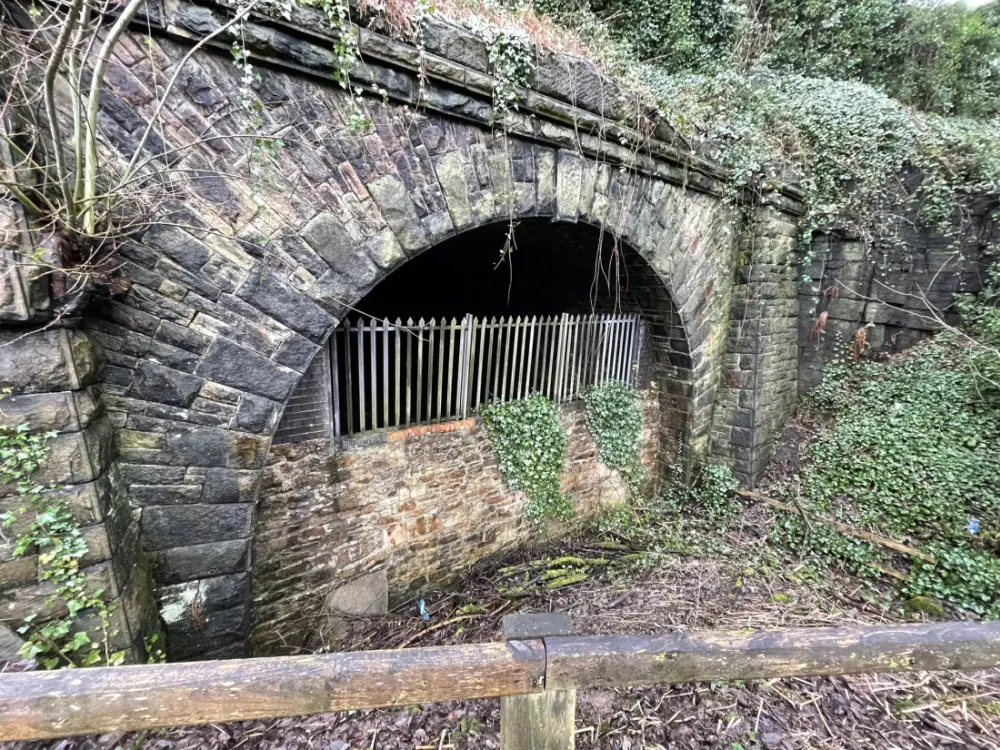
The far end of the tunnel is now blocked off and the former trackbed now constitutes the Sett Valley trail towards Hayfield. Source: Twitter.
The line to New Mills Tunnel End
Few people know that in April 1932, large numbers of trekkers arrived at Hayfield station by train and assembled to head for Kinder Scout. There were confrontations along the way with landowners who opposed public usage of their privately held area. This was the beginning of a widespread mass trespass campaign to assert that everyone have access to the UK countryside, not just a select group of wealthy landowners. Naturally, this has ensured the UK has a sizable amount of open countryside which provides lots of opportunities for walking.
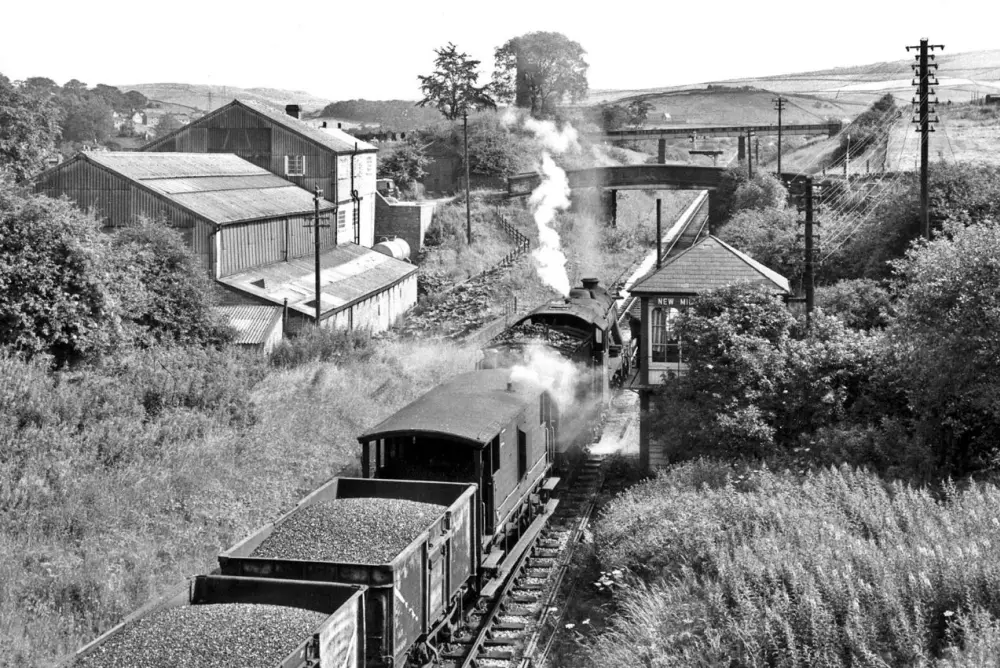
Freight train bound for Hayfield at New Mills Tunnel End box. Facebook.
Sadly the train isn’t any sort of real convenience these days for reaching Kinder Scout, the highest point in the Peak District, thanks to the UK’s mass rail closure programme which continued into the 1970s. Despite being the terminus of a very useful commuter route from Manchester the Hayfield branch closed in January 1970.
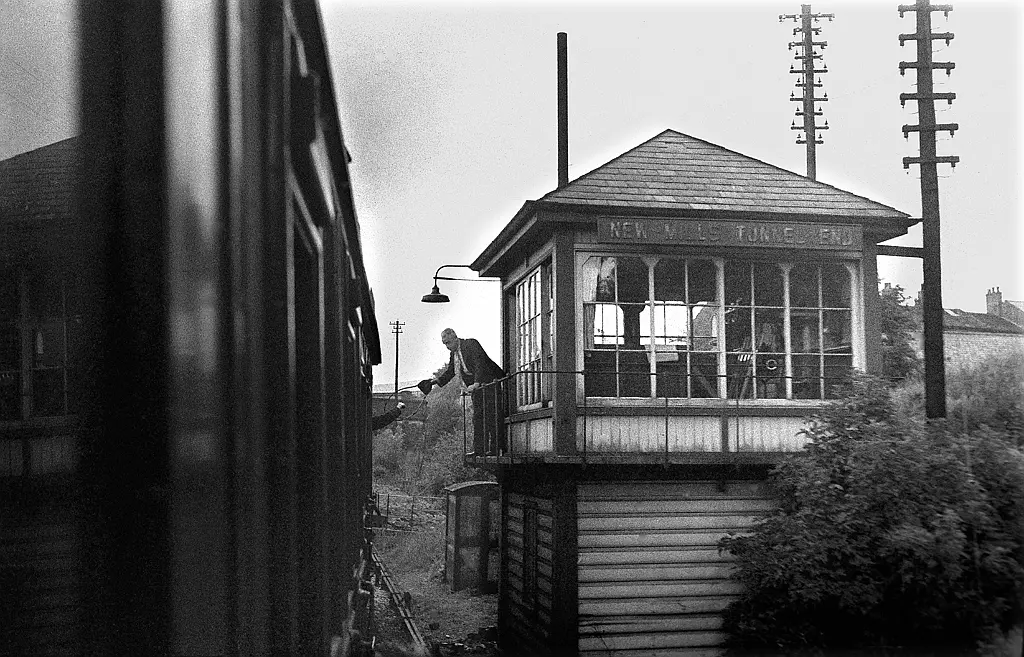
New Mills Tunnel End signal box in 1957 with the token for the section to Hayfield being retrieved. Flickr.
The fact a portion of the branch remained in use for trains meant stock had to work all the way to New Mills Tunnel End was most bizarre. The location in question was about a quarter of a mile beyond the tunnel itself. It meant that some 800 metres of the former Hayfield branch had to be kept for these operations, along with staff required to manage New Mills Tunnel End box.
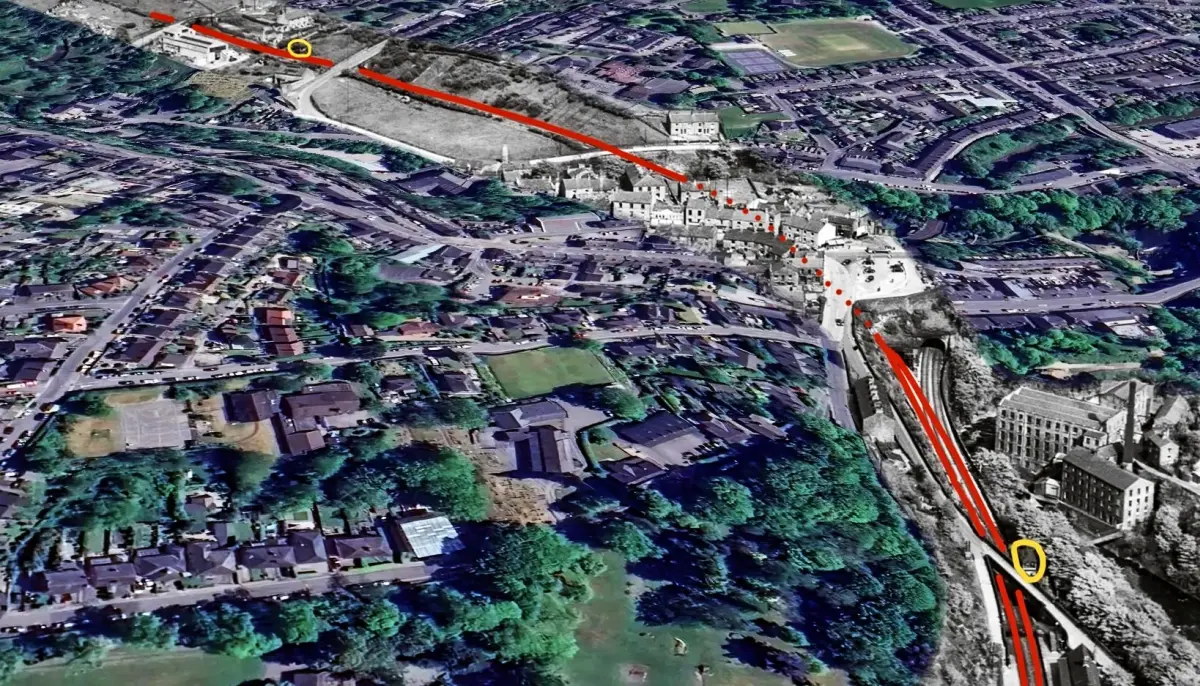
The unusual situation where trains had to travel as far as New Mills Tunnel End between duties before their return to Manchester, is depicted in this rather basic aerial combined from old (1940s) and modern Google aerials (accurate 2d for the old and shoddy 3d for the new). The double track to New Mills Tunnel End box has been left out for illustrative purpose. The box is indicated by a smaller yellow circle in the left upper portion of the picture. The bigger yellow circle in the lower right corner is the New Mills Central box. Image created by London Rail.
By way of Hayfield tunnel being placed under the control of New Mills Central box, BR eliminated a significant amount of unnecessary railway and staffing costs. Despite the tunnel being the reason for the branch’s closure, BR continued use of the tunnel for another thirty years or so!
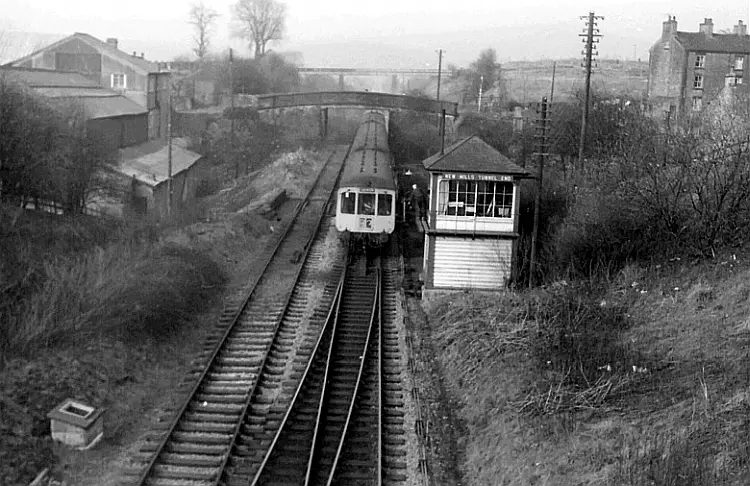
The single track line to Hayfield started at New Mills Tunnel End signal box. After 1970, the line would have ended just beyond the footbridge. This photo was however shot when trains were still going to Hayfield. It may have been taken just before the branch closed in 1970, as a similar photo on New Mills Local History Society website indicates. Source: RCTS photo from its now-defunct “Mystery Photos” section.

The tunnel signal box! A small but delightful structure. It was actually some distance from the tunnel’s end (around 500 metres) but still was called New Mills Tunnel End! Source: Annals of a Branch Line.
The section from the end of Hayfield tunnel to New Mills Tunnel End ceased use around 1974. Presumably the signal box and track were taken out soon after.
Originally published in 2021 as ‘A Mystery DMU Tunnel’. The original post had also included an overview of the entire branch to Birch Vale and Hayfield. It has however been offline for several years because of a number of missing images (due to link rot or other websites’ changes such as renaming all the links etc). A search through the archives revealed the post was still somewhat complete, and after locating several of the pictures that had gone missing or had their URLs altered, it was decided the post could be republished. This 2026 version features the tunnel and line to New Mills Tunnel End only and is substantially expanded with new images.
Leave a Reply